
Project facts
Location: Eindhoven
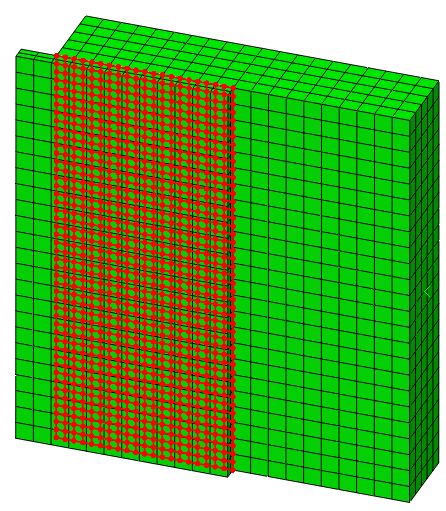
Challenge: Testing/assessing the accuracy of numerical models of a PU adhesive bond between spruce wood and densified veneer lumber. The numerical models were assessed based on experimental research.
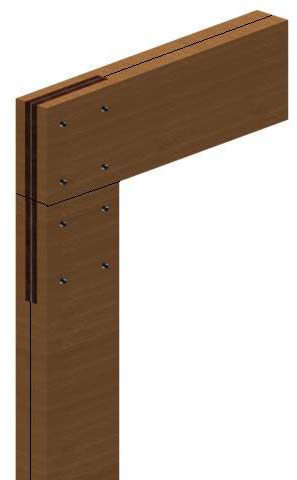
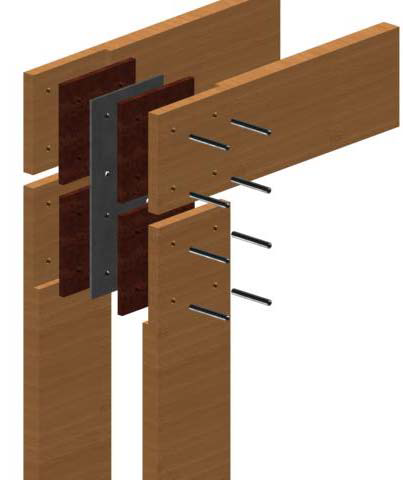
When designing timber structures, timber joints are often unavoidable, partly due to the available timber dimensions. When the joint proves to be critical, the profiles at the joint must be adapted accordingly, often by increasing the cross-section of the elements. For economic reasons, the enlarged cross-section is often extended along the entire length of the component. One of the most important considerations in the design of a timber-to-wood joint is the potential splitting of the structural timber. To prevent this splitting, standards specify minimum edge, end, and intermediate distances for fasteners. These requirements regarding the spacing of fasteners often result in profiles being made larger than would be necessary to accommodate the shear forces and moments within the element itself. Compressed veneer lumber possesses high compressive strength and stiffness and is capable of withstanding high concentrated forces. By bonding compressed veneer lumber to the timber at the joint, the forces in the realized joint are absorbed by the compressed veneer lumber and distributed across the bonding surface via this material. These forces are subsequently transferred to the wooden element via the adhesive. This prevents the wooden element from splitting. In addition to a higher resistance to splitting of the joint, the high compressive strength of the compressed veneer allows for small edge and end distances of the fasteners, and the joint strength increases. Consequently, the use of a wood joint reinforced with compressed veneer allows for the use of fewer but larger fasteners. This has the advantage of being less labor-intensive and therefore cheaper. Moreover, due to the smaller spacing, smaller profiles are required for the joint, allowing the material to be used more economically.
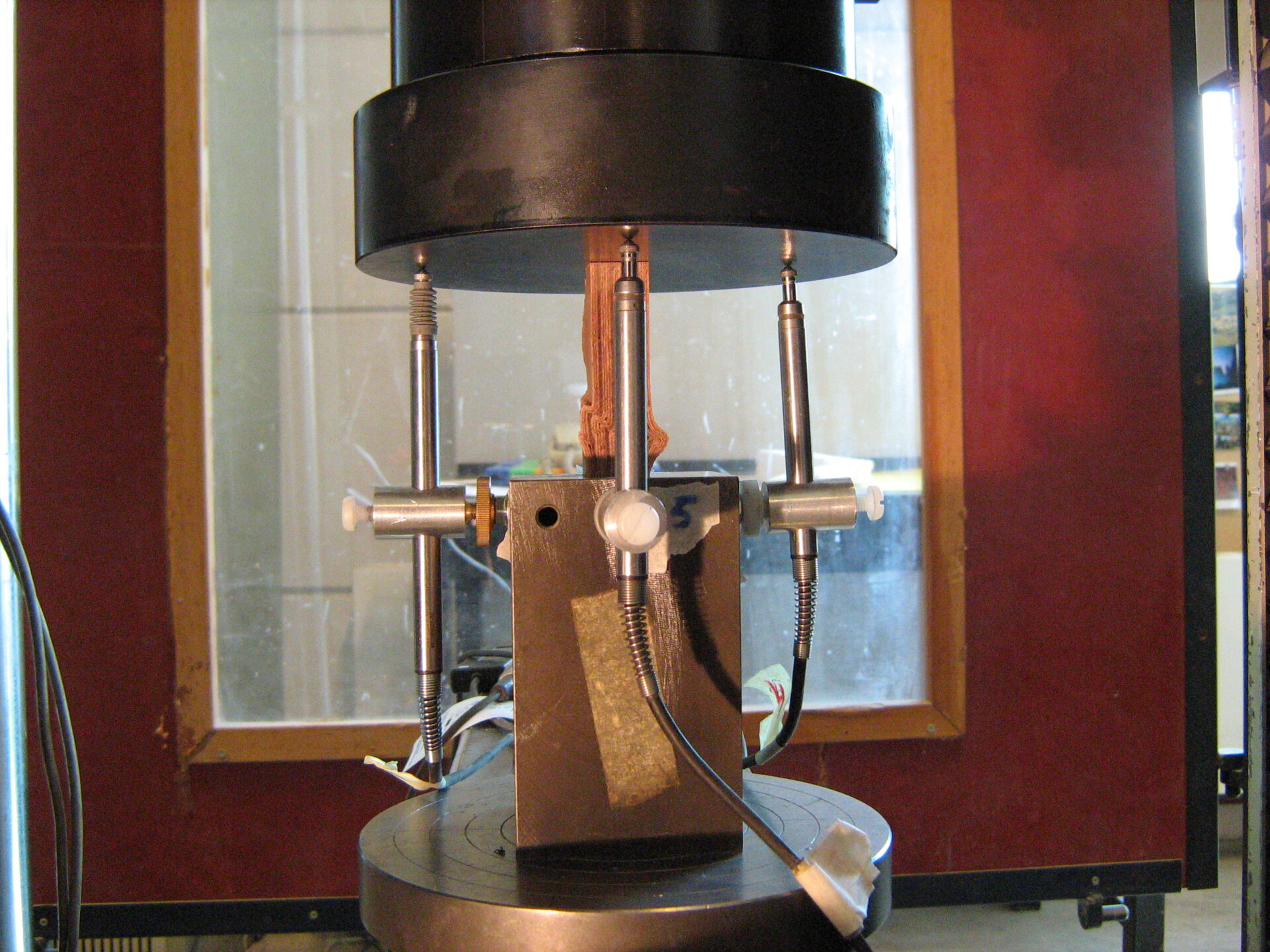
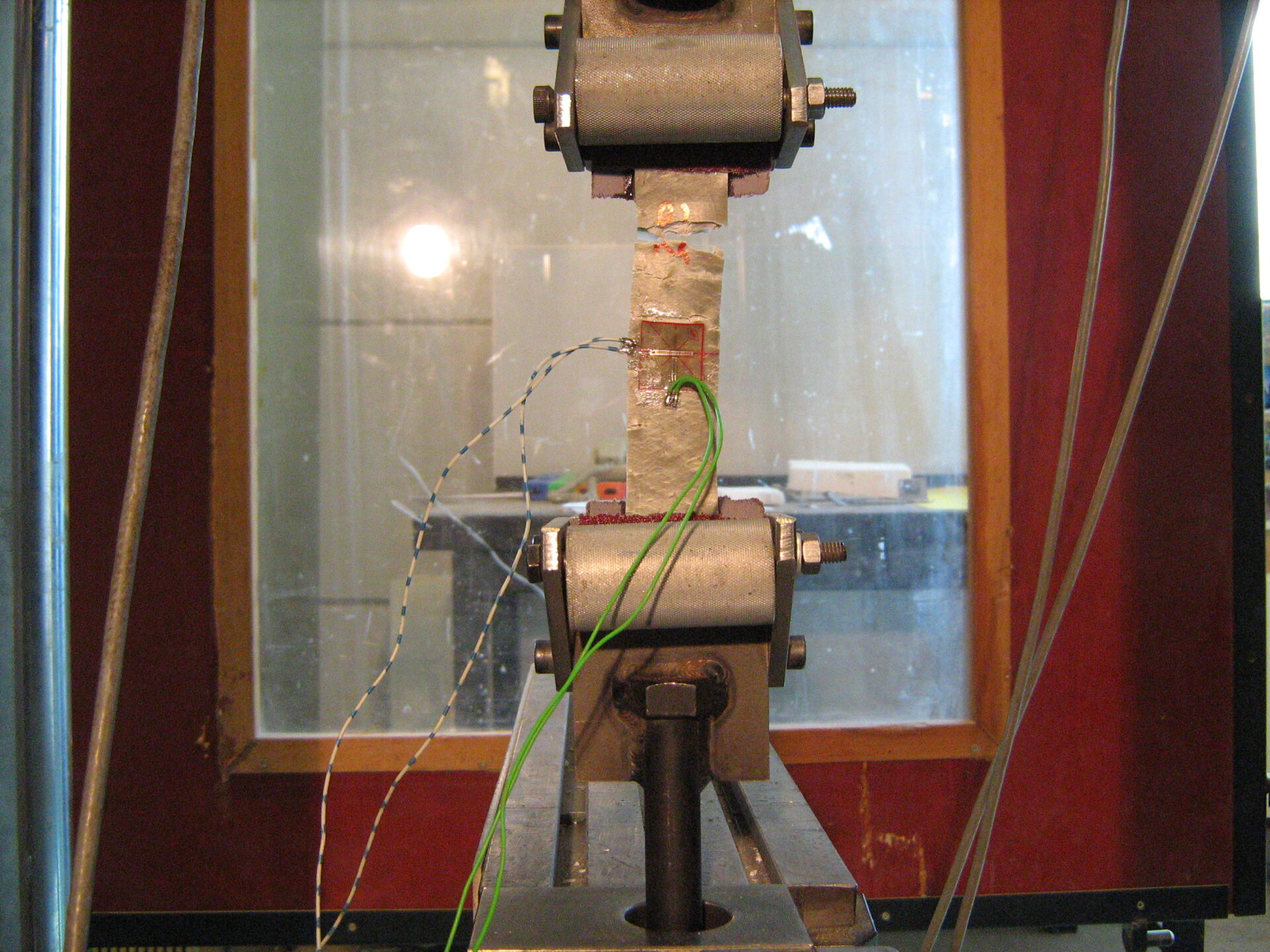
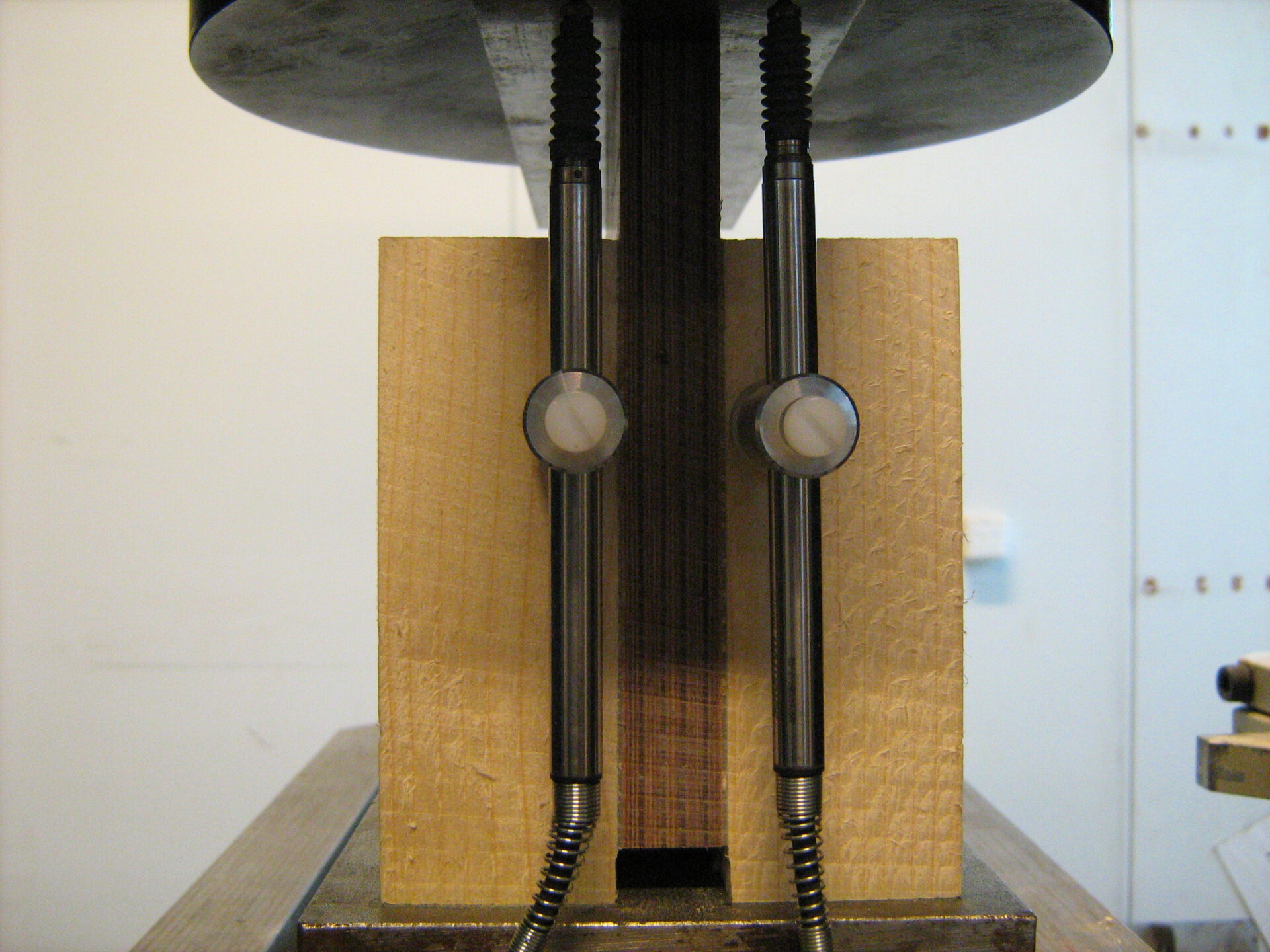
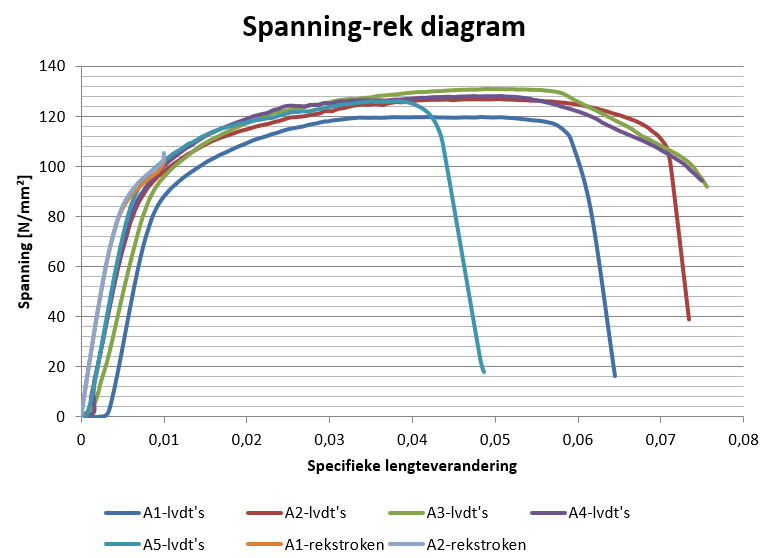
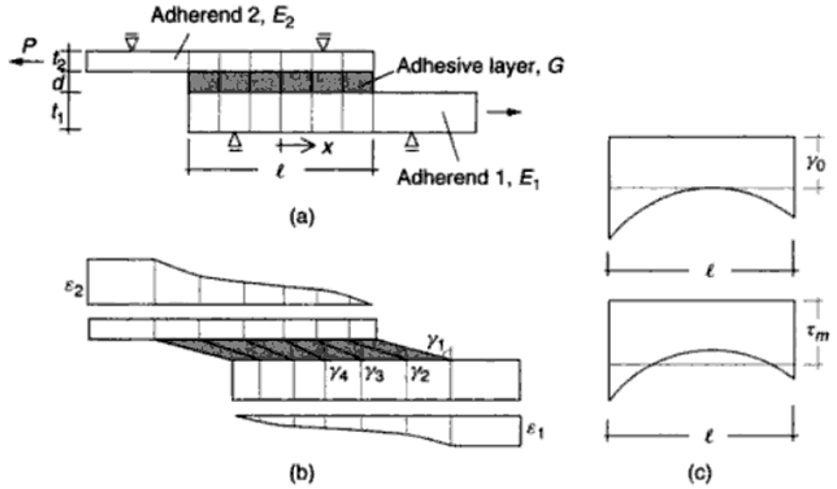
In the experimental study, compression tests were performed on densified veneer lumber. This was done to determine the compressive strength and modulus of elasticity of the densified veneer lumber. Tensile tests were also performed on a strip of PU glue. This was done to determine the modulus of elasticity, Poisson factor, shear modulus, and tensile strength of the PU glue. Furthermore, shear tests were performed on a double-cut PU glue joint between spruce and densified veneer lumber. This was done to determine the capacity of the glue joint between spruce and densified veneer. Test pieces with different glue lengths and different glue thicknesses were used for this purpose.