
Theoretical and numerical buckling research in high-rise buildingsstability
Project information
Location: The Netherlands
Project type: Theoretical & numerical academic research
Objective: Fundamental stability study, formulation of buckling equations, and FEM validation for high-rise structures with varying stiffness
Project description
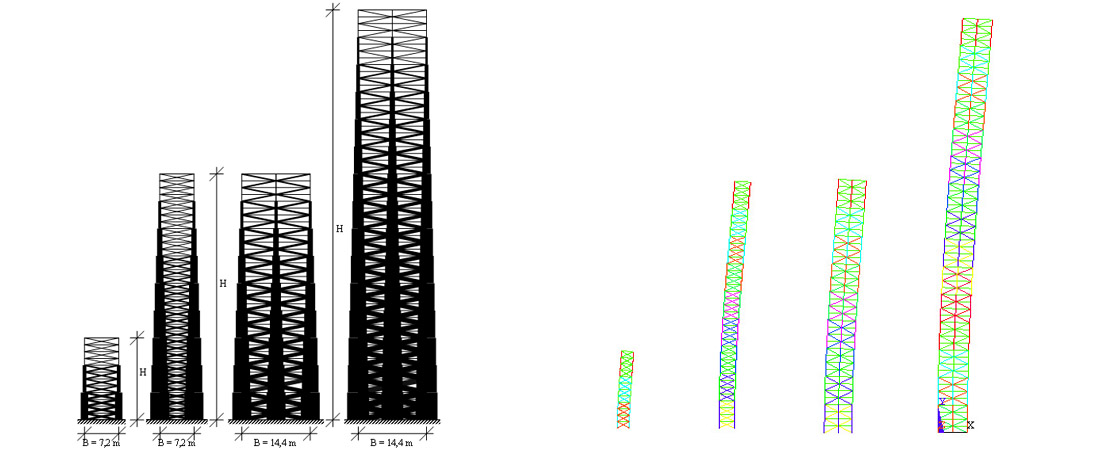
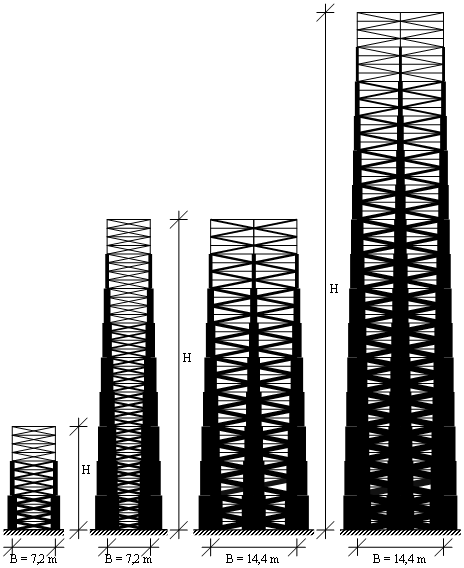
In practice, the structural calculation of the global stability of tall buildings is often based on constant bending and shear stiffness, as well as a uniform horizontal load over the entire building height. However, when designing efficient, tall, slender structures, the required stiffness decreases towards the top. This research focused on determining the critical buckling load of vertical steel truss structures (stability elements), whose stiffness decreases linearly over the height of the building.
The aim of this study was to theoretically understand the mechanical behavior of these variably rigid stability walls and trusses and to develop practical, simplified calculation formulas for the early design phase of high-rise projects.
Research Methodology & Validation
The research combines mathematics with advanced numerical finite element simulations (FEM):
• Parameter study: An extensive parameter study was conducted to compare the effect of various stiffness profiles, geometries, and load combinations, demonstrating the accuracy and scope of the developed formulas.
• Analytical formula derivation: Using the computer-based mathematics program Wolfram Mathematica, analytical formulas were derived to determine the critical buckling load, based on existing mechanics principles and variable stiffness profiles.
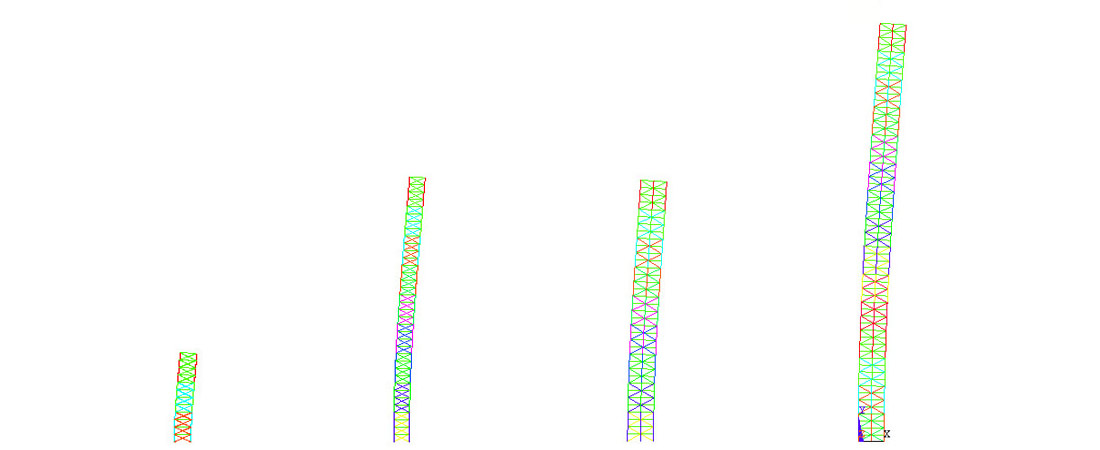
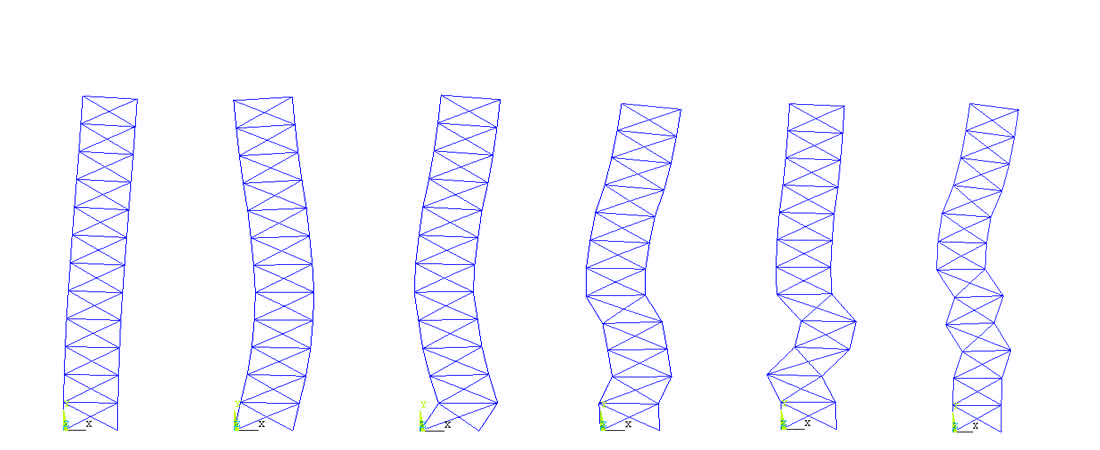
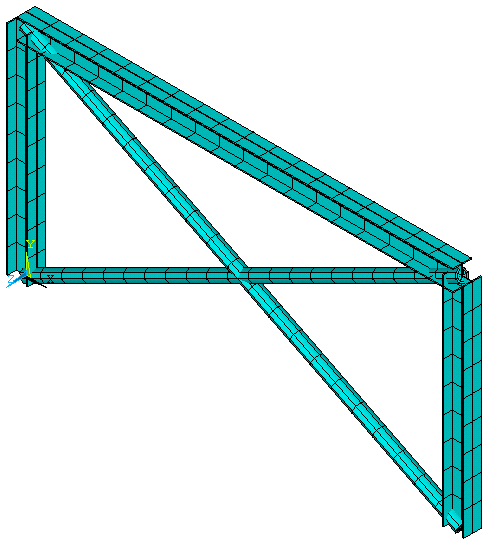
• Numerical FEM validation: The theoretically developed equations have been verified using linear buckling analyses (eigenvalue buckling analyses) in the specialized finite element software ANSYS.
Elaborated parts
• Analytical derivation of buckling formulas for variably stiffened trusses
• Numerical modeling and linear buckling analyses in ANSYS
• Parametric comparison study (theory vs. FEM)
Supplied files
• Mathematical derivations and Mathematica notebooks
• Numerical research and EEM analysis report
• Derived calculation formulas and graphical parameter models